
Your needs, this model
Does it fit your priorities?
Can I schedule an indoor appliance and use Apple Home with this one-pack?
TP-Link documents weekly schedules in the Tapo app and Matter setup for Apple Home. This assessment treats Tapo routines with an optional compatible Matter controller as one arrangement; confirm your current Apple Home controller/app support, and use the TP15 schedule in Tapo rather than assuming every routine appears in Apple Home.
Explore this need in the finder →Will this TP15 operate a motor up to the stated 1/6 hp limit?
The US TP15 quick-start guide lists a separate 1/6 hp motor rating. Its 15 A / 1,800 W resistive rating is not a substitute for the motor limit; inspect the appliance's horsepower, startup behavior and manual before connecting it.
Explore this need in the finder →Does the 1-pack's 15 A rating cover one device or the package?
The category and selected page identify one TP15 plug. The published 15 A and 1,800 W at 120 V limits apply to that device and its general/resistive load, not to additional plugs or a group of outlets. Compare the connected appliance's own rating and instructions.
Explore this need in the finder →Assessment scope: This is a document-based review of the US TP15 V1 one-pack route, not a hands-on test. I did not own or operate the plug, measure its output, or test a household network. TP-Link's category page assigns the one-pack to its own TP15 item, and the selected package page identifies V1 with one plug. The generic family route can render a different pack selection, so treat the exact package label as important rather than relying on a family-page image or title alone.
One socket to automate, not a mini power strip
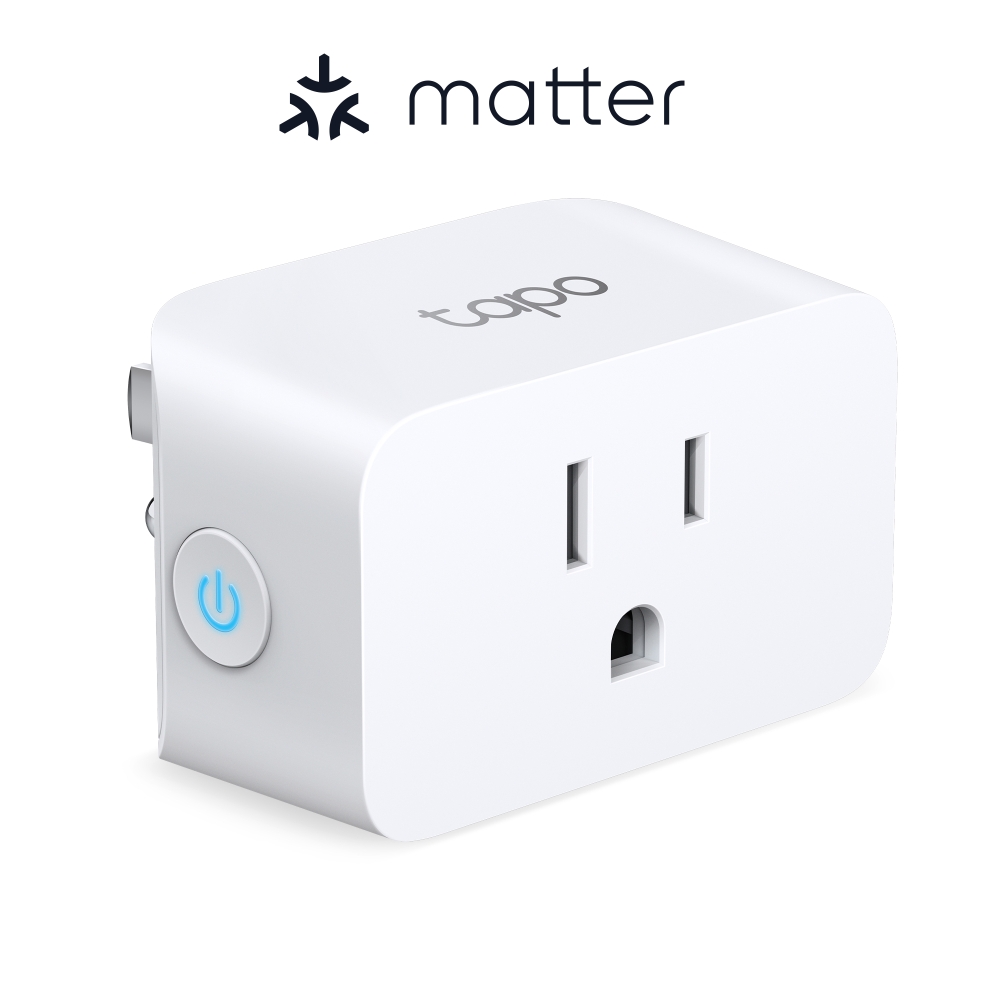
The physical proposition is simple: a compact, direct-plug device controls one downstream receptacle. The small body may help preserve a neighboring receptacle, but the manufacturer's design claim is not a promise that the plug will clear every wall plate, another bulky adapter or a stiff power cord. Its published dimensions are 2.4 by 1.5 by 1.3 inches, height by width by depth. Measure the actual outlet, cover plate and cord path before ordering; dimensions on a product page are not installation-clearance measurements.
The one-pack is the cleanest fit when a single location is the task: a lamp, a modest household appliance, or a device whose power you want to schedule. It gives you one device to commission and one load to check. That sounds obvious, but the package count is useful context in a category where multi-packs and product-family routes can look nearly identical. This page is not comparing prices or seller stock, and it does not claim that TP-Link's current listing guarantees a retailer will ship this exact configuration.
Two control paths, with different jobs
TP15 combines 2.4 GHz Wi-Fi with Matter certification; Bluetooth is used for setup, not as the plug's operating network. TP-Link describes Tapo-app remote control, scheduling, a countdown/Auto-Off timer and Away Mode. The product materials also describe local access through the Tapo app or a configured Matter-compatible home app when the household loses internet service. That is a narrower claim than “works without a network”: first commissioning still needs the setup path, and the router or local Wi-Fi must remain available for local control.
Matter gives the plug a route into Apple Home, Alexa, Google Home and SmartThings, but a platform logo is only the beginning of setup. TP-Link recommends starting in its Tapo app and describes third-party Matter control; most of those integrations require a compatible controller or hub and the matching platform app. Multi-admin can let a device participate in more than one Matter ecosystem, but it does not guarantee that each app exposes the same routines. TP-Link documents the TP15's schedule and Away features in its own app, so I would keep Tapo as the reference for those controls unless the chosen platform's exact behavior is confirmed.
Electrical limits are not interchangeable
The US TP15 materials list 100–125 V, a maximum of 15 A and 1,800 W at 120 V for general or resistive loads. They also state a separate 1/6 hp motor limit and an 8 A incandescent limit. Those figures describe different load categories, not three interchangeable ways to approve an appliance. The quick-start guide warns against exceeding the motor/compressor rating and calls out startup concerns. A motor that draws less than 15 A while running can still have a higher starting demand; read its nameplate and manual rather than using the general-resistive number as blanket approval.
There is no basis here for treating the one-plug bundle as an energy monitor. The sources reviewed do not establish consumption reporting for TP15, so I leave that capability unconfirmed. A timer can switch power; it is not the same as measurement, metering accuracy or energy-cost tracking.
Where this model fits—and where it does not
TP15 is an indoor plug. Its US instructions say indoor use only and the datasheet warns against damp environments and outdoor use. A porch roof or covered outlet does not change that rating. It is also a poor match when you need multiple independently controlled outlets from one wall-mounted unit, energy reporting, a verified fit without measuring, or a guarantee that a third-party app will reproduce Tapo's timers.
For one ordinary indoor load and one control point, the one-pack avoids buying unused devices and keeps the installation decision manageable. Check the package quantity, US model/version label, your Wi-Fi band, the appliance's separate motor or incandescent limits, and whether a Matter controller is already available. The supplied user-guide link on TP-Link's support page resolves to a PDF labelled for the different P125M; I have not used that document to make TP15 claims. The TP15 datasheet, multiple-pack quick-start guide and selected package page support the assessment, while the exact seller hardware suffix still needs confirmation.
Key specifications
Key details at a glance
| Controlled outlets | One controlled outlet per plug |
|---|---|
| Reviewed package | 1-pack |
| Maximum current | 15 A |
| Maximum published watts at 120 V | 1800 W |
| Motor limit | 1/6 hp |
| Body height | 2.4 in |
| Body width | 1.5 in |
| Body depth | 1.3 in |
| Network and protocol | 2.4 GHz Wi-Fi; Matter-certified; Bluetooth is for setup only. |
| Indoor use only | Yes |
| Outdoor rating | No |
| Schedules documented | Yes |
| Countdown timer / auto-off | Yes |
| Away Mode | Yes |
Use the exact model’s instructions for operating limits, supplied equipment and version differences.
Sources for this review
Sources for this assessment
- TP-Link US Smart Plugs category page 1, TP15 package rows
- TP-Link US TP15 V1 selected 1-pack product page
- TP-Link US TP15 support page and hardware-version selector
- TP-Link TP15 (US) V1.6 datasheet
- TP-Link Mini Smart Wi-Fi Plug US multiple-packs quick-start guide
- TP-Link Matter devices: setup guide, hub compatibility and tips
- CPSC SaferProducts exact-name recall query for TP15
Check the exact version against your own outlet
The finder checks documented ratings and features; it cannot approve your appliance, outlet wiring or physical clearance.