
Your needs, this model
Does it fit your priorities?
Can EP10 run a scheduled indoor heater?
The EP10 guide describes schedules with a selected frequency, and its datasheet rates the plug at 15 A / 1,800 W for general-use resistive loads. The guide gives a heater example up to 1,500 W. Check your heater's own label and instructions; the example does not approve every heater.
Explore this need in the finder →Is EP10 confirmed for Apple Home or Matter?
The checked EP10 page and guide list Kasa, Alexa, Google Assistant and SmartThings but do not document Apple HomeKit or Matter for this model. Choose an exact model whose own support page confirms the required Apple/Matter route.
Explore this need in the finder →Can I use EP10 for a motor appliance?
The checked EP10 materials publish a 15 A / 1,800 W general-use resistive ceiling but no motor-horsepower limit. The matcher therefore does not treat an unknown motor rating as a fit; verify with the appliance and exact plug instructions.
Explore this need in the finder →Research-based assessment of TP-Link's US Kasa EP10 V1 product route. I have not owned or tested this plug; this review interprets the manufacturer's product specifications, datasheet, user guide and support material. The catalog route does not identify one retail pack size.
One EP10 plug, but not one settled package
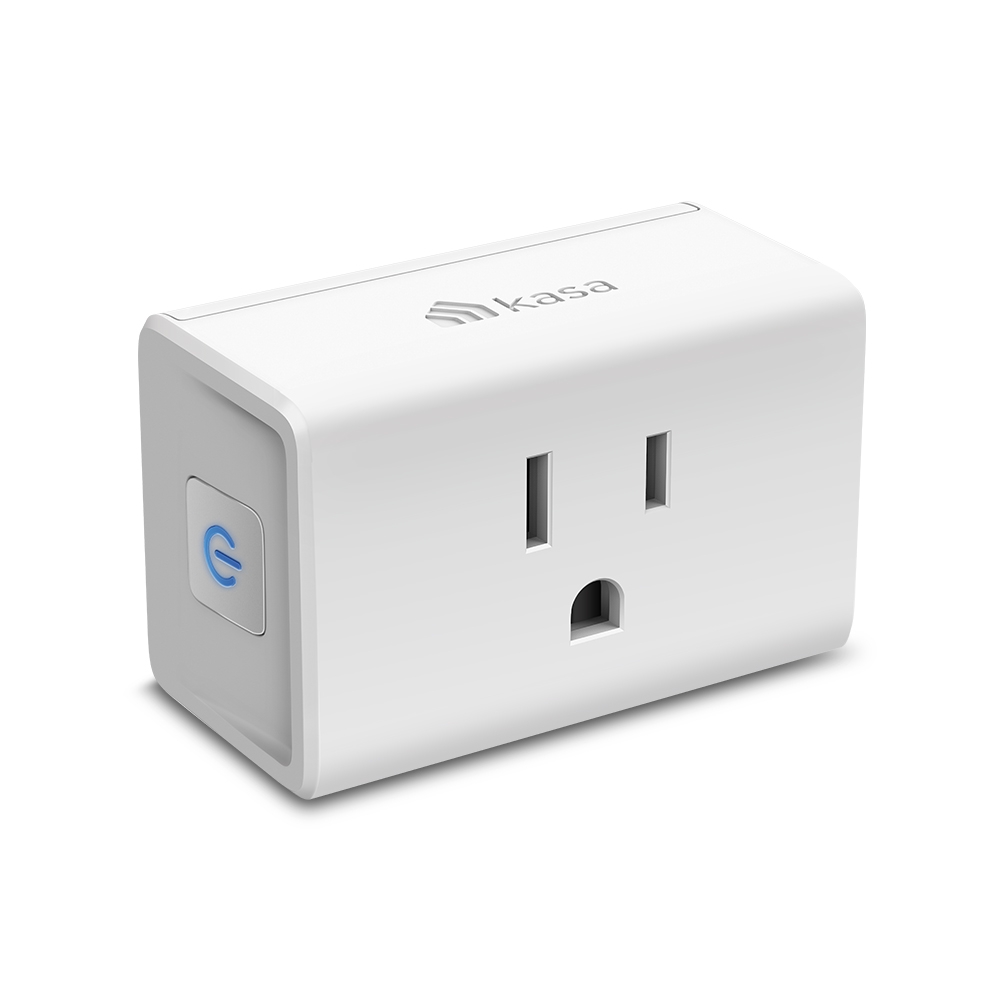
The EP10 is a Kasa-branded Wi-Fi plug with one controlled receptacle on each plug body. TP-Link lists 1-, 2-, 3- and 4-plug packages; the US catalog identifies EP10 V1 without selecting one. I therefore treat this as a model-level assessment, not a claim that the catalog item is a particular pack. Check the seller's label and quantity before comparing total outlets or price.
That distinction matters in a small product category: a four-pack contains four separate single-outlet devices, not a single four-outlet adapter. The package count also does not multiply the rating of any one plug. Use the EP10's limits separately at each appliance, and do not rely on a family image or search-result title to establish what a particular listing ships.
App control and routine features
The manufacturer specifies 2.4 GHz 802.11 b/g/n Wi-Fi and the Kasa Smart app. Its guide describes schedules, a countdown timer, Away Mode and a side power/settings button, with no separate hub required for the Kasa app route. The product page lists voice control through Alexa, Google Assistant and Samsung SmartThings. These are useful everyday controls for a lamp or another load whose own instructions allow remote switching.
The checked EP10 sources do not document Apple HomeKit or Matter. That is a documentation boundary, not proof that the plug could never gain support in a later revision or app; it means this review cannot recommend it for an Apple Home or Matter requirement. Likewise, the source set does not explain whether local app control continues through an internet outage, so I would not treat it as a confirmed offline-control choice.
Energy reporting is also unconfirmed. The checked page, datasheet and guide describe ordinary switching and schedules, not a consumption-monitoring feature. If you need watt-hours or current-use history, choose a configuration whose exact documentation names that function rather than assuming it from the Kasa app.
Read the electrical rating as a boundary
TP-Link lists 100–120 V input/output, a maximum of 15 A and 1,800 W for “General Use, Resistive Load.” The guide also gives example appliance ceilings—such as 1,500 W for a heater and iron, 850 W for a toaster, 260 W for a humidifier and 50 W for a tower fan. Those examples are not permission to ignore an appliance's nameplate or instructions. Check the specific load type, voltage, current, wattage and any manufacturer limit for the equipment you intend to switch.
No motor-horsepower rating appears in the checked EP10 material. A 15 A or 1,800 W number does not establish suitability for a motor, compressor or another specialty load. The finder therefore fails closed when a required motor rating is unknown. This is a practical difference from TP-Link's P125 and P125M pages, which state separate motor limits, and from the EP25P4 route's product information, which publishes one; the EP10's rating should not borrow those numbers.
The plug is for indoor use. Its product page makes a compact-body claim and says it is designed to leave the second socket accessible, but the reviewed materials do not provide numeric dimensions. Without those, I cannot compare its body precisely against a narrow wall plate or adjacent plug. Treat the clearance claim as a design intention, not a fit guarantee; check the actual outlet and cord path.
How it compares with the other reviewed Kasa options
The two-plug EP25P2 package adds documented HomeKit support and energy monitoring, but its V2.6 documents do not give the EP10's explicit 15 A limit or a motor-horsepower ceiling. The older EP25P4 assessment has a four-plug package and a separately stated motor limit, but its catalog entry is an earlier hardware route with end-of-sale history to check. The P125 and P125M are different Tapo models, not interchangeable EP10 editions: the P125 documents HomeKit, while the P125M is the Matter-enabled model.
So the EP10 is not the automatic “best” choice even when it shares the Kasa app with more feature-rich plugs. Its clearer advantage is the explicitly stated general/resistive electrical ceiling and a straightforward schedule/timer/Away Mode set, when an indoor load and a supported voice assistant are enough. It loses ground if verified energy use, Apple Home, Matter, a published motor rating, precise body dimensions or confirmed internet-loss behavior is essential.
Who should consider it?
Consider the EP10 for an indoor, general/resistive appliance whose nameplate falls within the model's documented range, when you want a Kasa schedule or countdown timer and are comfortable checking the specific retail package. Avoid treating it as an outdoor plug, an energy meter, an Apple Home accessory, a Matter device or a documented motor switch. If one of those conditions is a must-have, the current evidence points elsewhere or remains too incomplete to support a match.
Before placing an order, ask the seller to identify the exact US model, hardware version and number of plug units, then compare the shipped package with the manufacturer documentation. Do not infer stock, current price or product freshness from the fact that TP-Link still hosts a page or firmware note. No switching endurance, temperature, network reliability, energy accuracy or app response was measured for this assessment.
Bottom line
The EP10 V1 is a modest indoor Kasa plug with documented 2.4 GHz Wi-Fi, voice integrations, schedules, a timer and a clear 15 A / 1,800 W general-resistive ceiling. The important gaps are equally clear: unknown package quantity on the catalog route, no numeric dimensions, no published motor limit, and no verified energy monitoring, Apple Home, Matter or offline app behavior in the checked materials. Read TP-Link's EP10 product specifications and versioned downloads alongside the exact offer.
Key specifications
Key details at a glance
| Controlled outlets | One controlled outlet per plug |
|---|---|
| Reviewed package | Model-level EP10 device; manufacturer lists 1-, 2-, 3- and 4-plug packages, but the US catalog route does not choose a retail pack size. |
| Maximum current | 15 A |
| Maximum published watts at 120 V | 1800 W |
| Network and protocol | 2.4 GHz 802.11 b/g/n Wi-Fi with the Kasa Smart app; the checked EP10 materials do not document Apple HomeKit or Matter. |
| Indoor use only | Yes |
| Outdoor rating | No |
| Schedules documented | Yes |
| Countdown timer / auto-off | Yes |
| Away Mode | Yes |
Use the exact model’s instructions for operating limits, supplied equipment and version differences.
Sources for this review
Sources for this assessment
Check the exact version against your own outlet
The finder checks documented ratings and features; it cannot approve your appliance, outlet wiring or physical clearance.